

ARIS, the “Emperor” of Greek basketball and the best Greek team of the 20th century in all sports
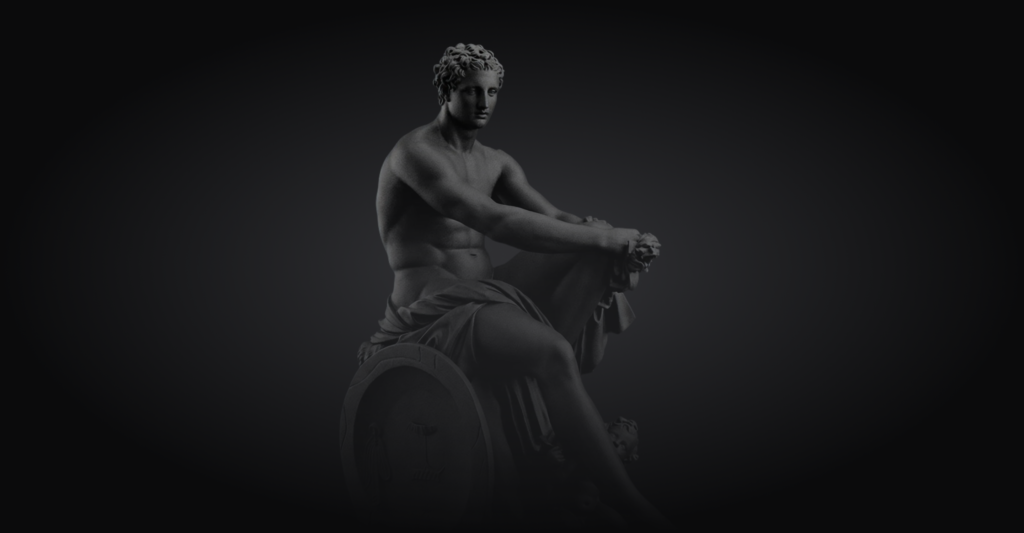
The club with the iconic yellow jersey and the emblem of Ares, the God of War, on its chest — a symbol of strength, identity, and heritage.
ARIS was not just a dominant team; it was the force that modernized basketball in Greece, captivating an entire nation and bringing the sport into every household. At its peak, it transformed basketball into a cultural phenomenon, drawing millions of fans to their television screens.
From its early years, ARIS showed its ambition to lead. Within a short time of its founding, the club began building a legacy defined by success and consistency. Its 22 major titles: 10 Greek Championships, 8 Greek Cups, 1 Greek Super Cup and 3 European trophies, stand as clear evidence of its historical weight and competitive excellence. The two stars above the club’s crest reflect this legacy and command respect.
Some of the most influential figures in Greek basketball history wore the ARIS jersey. Legends such as Nikos Galis, Panagiotis Giannakis, Phaedon Matheou, and Harris Papageorgiou, alongside renowned coaches like Giannis Ioannidis and Anestis Petalidis, shaped not only the club’s identity but also the course of Greek basketball as a whole.
Their impact extended beyond ARIS. They contributed to defining an era, elevating the sport nationally, and creating a legacy that continues to resonate not only with ARIS supporters, but with the entire Greek basketball community.
Timeline
In this section are presented some of the greatest moments of the glorious club of Thessaloniki. Special thanks to Kostas Idos, author of the project “The History of ARIS”, for his valuable help and for the material he offered.
1922
THE “BIRTH” OF ARIS BASKETBALL
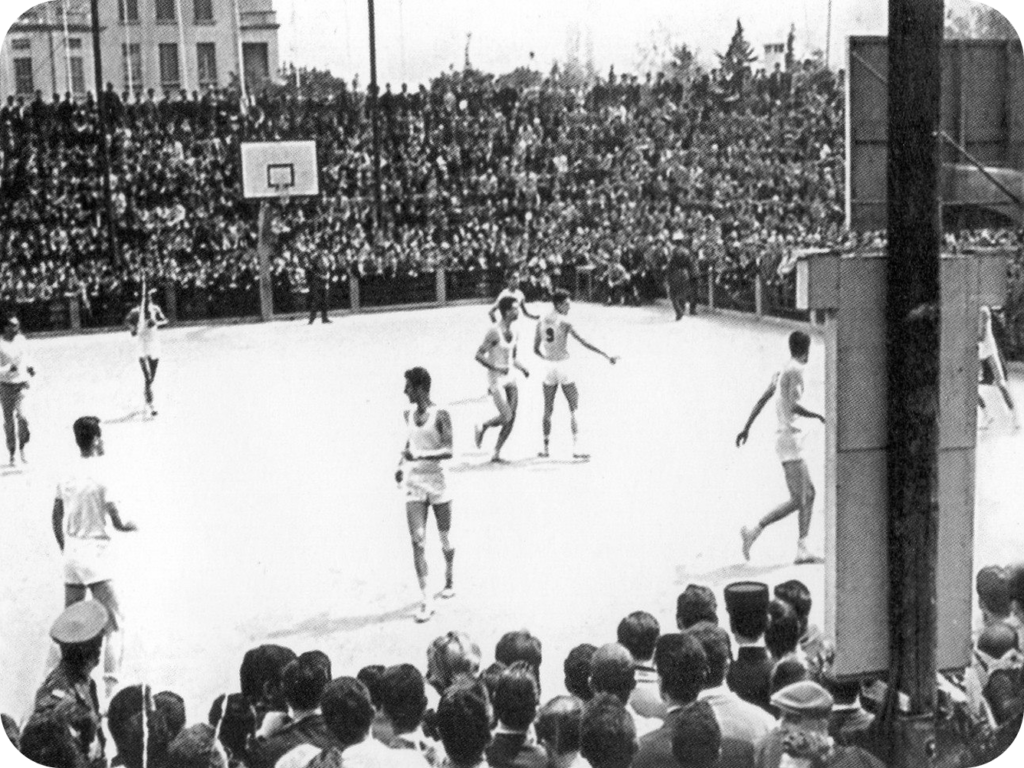
Eight years after the founding of A.C. Aris Thessaloniki, the club’s basketball team was established, marking the beginning of its presence in the sport. From the outset, ARIS demonstrated the qualities of a dominant force, winning five consecutive titles in the newly established Thessaloniki Championship between 1925 and 1930. At the time, basketball was still in its early stages in Greece, having been introduced by the YMCA in 1919, with teams competing in open-air courts and the first official competitions organized in November 1925. ARIS quickly set itself apart, going unbeaten in the inaugural championship with victories over YMCA, Iraklis, AEK, V.A.O., and Jewish Akoach, and repeating this dominance in the following seasons by consistently overcoming key local rivals such as PAOK, Iraklis, YMCA, and AEK. In the years that followed, ARIS established itself as the undisputed powerhouse of Thessaloniki basketball, regularly securing titles without defeat and often by overwhelming margins. This superiority was clearly reflected in 1930, when ARIS defeated Iraklis 93–7 on February 9 and followed it with a 51–12 victory over PAOK on March 12—results that underline the significant gap between ARIS and its competitors during that era.
1930
THE FIRST GREEK CHAMPIONSHIP
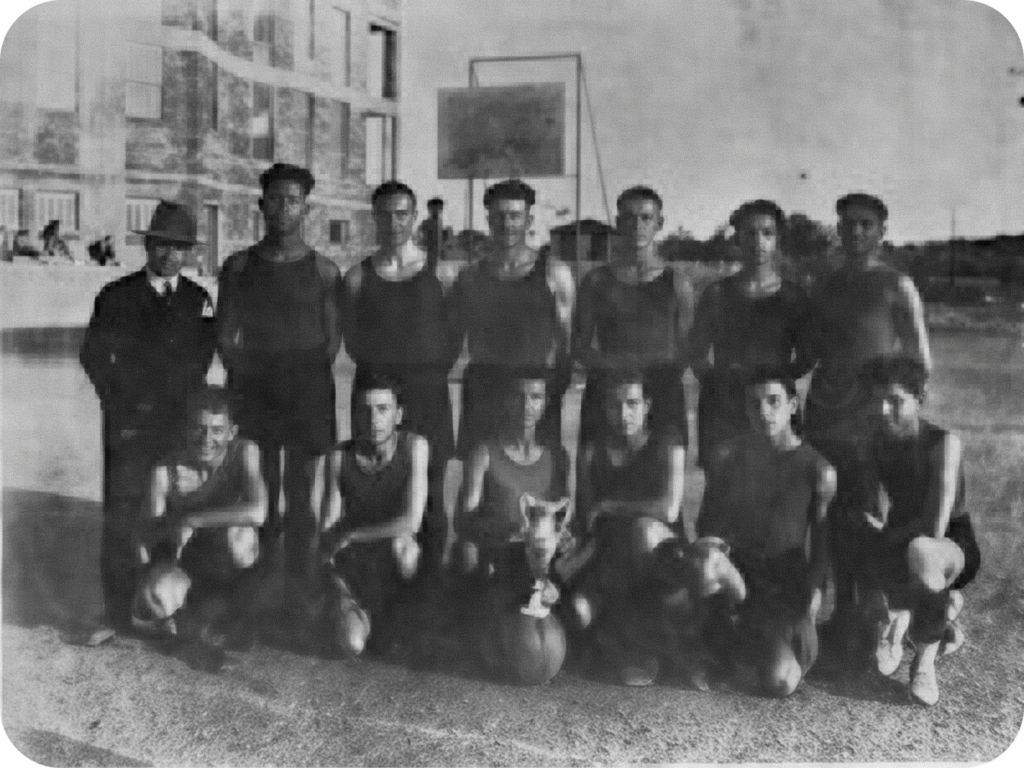
During the 1927–1928 season, the first National Championship was introduced, bringing together the leading clubs from Thessaloniki, Athens, and Piraeus, and further elevating the reputation of ARIS on a national level. In its debut participation, ARIS finished third, but just two years later, on April 23, 1930, the club claimed its first Greek Championship title with a 32–22 victory over YMCA, who hosted the final. On their path to the title, the “Yellows” recorded dominant wins against Near East (43–23) and Panionios (64–27), underlining their superiority. Notably, the team achieved this success without a head coach, with players Achileous, Danelian, Dimoudis, Zografou, Iasonidis, Karatzas, Benlian, and Papafotiou forming the core of the squad, under the presidency of Giannis Angelou.
1955
THE FIRST INTERNATIONAL AWARDS
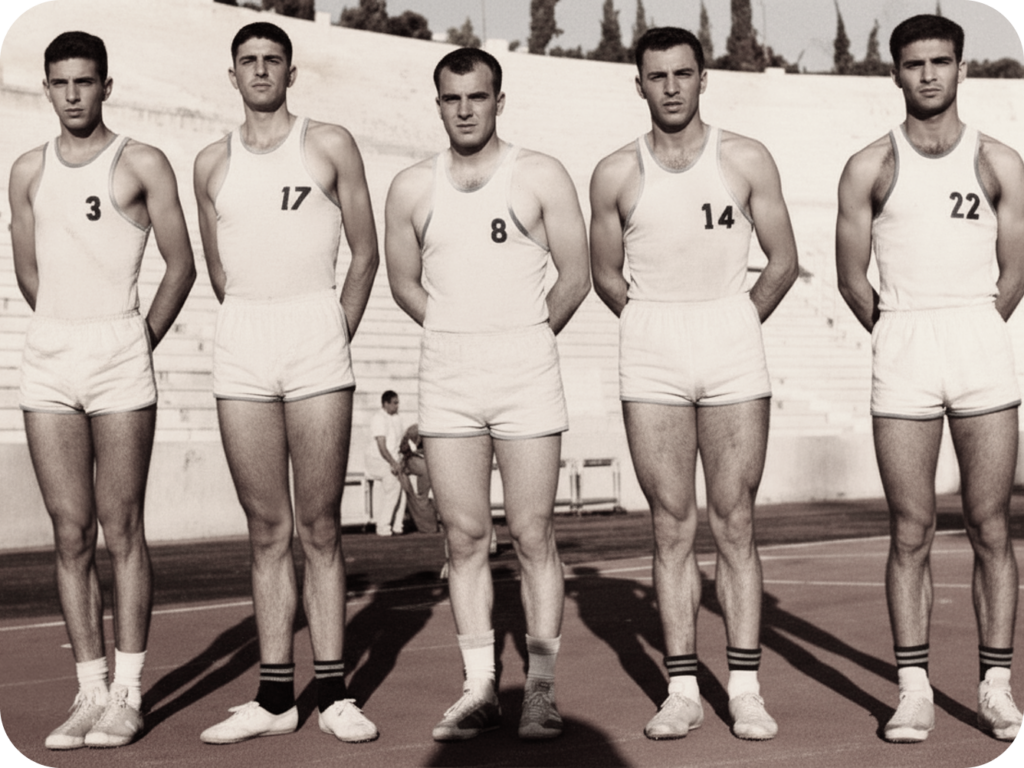
In the postwar period, the history of ARIS became closely associated with Phaedon Matheou, a central figure in the development of both the men’s and women’s basketball sections of the club. Through his contribution, ARIS returned to competitiveness, twice reaching the top of the Thessaloniki Championship standings alongside YMCA, although falling short in the decisive matches for the title. In the early 1950s, the club established its home at an outdoor court on Vasilissis Olgas Street, which remained its base until the 1959–1960 season. This period also marked ARIS’ first steps on the international stage. In 1955, the team participated in the Viareggio international tournament in Italy, reaching the final before narrowly losing 48–46 to Red Star Belgrade, with Matheou finishing as the tournament’s top scorer with 129 points in four games. In 1958, ARIS returned to Italy for tournaments in Messina and Palermo, securing four trophies, while also achieving a notable 61–57 victory over Yugoslav champions Beogradski in Thessaloniki. The club’s international momentum continued in 1959, when ARIS won another tournament in Liège, Belgium, defeating Antwerp 61–45 in the final. The team made its first appearance in an official European competition in the 1966–1967 season, participating in the Cup Winners’ Cup as Greece’s runner-up, where it was eliminated by Maccabi Tel Aviv. That same period marked a significant transition, as ARIS moved to the Alexandrio Melathron of Thessaloniki, which remains the club’s home to this day.
1979
NICK GALIS, The “GOD” came from New Jersey
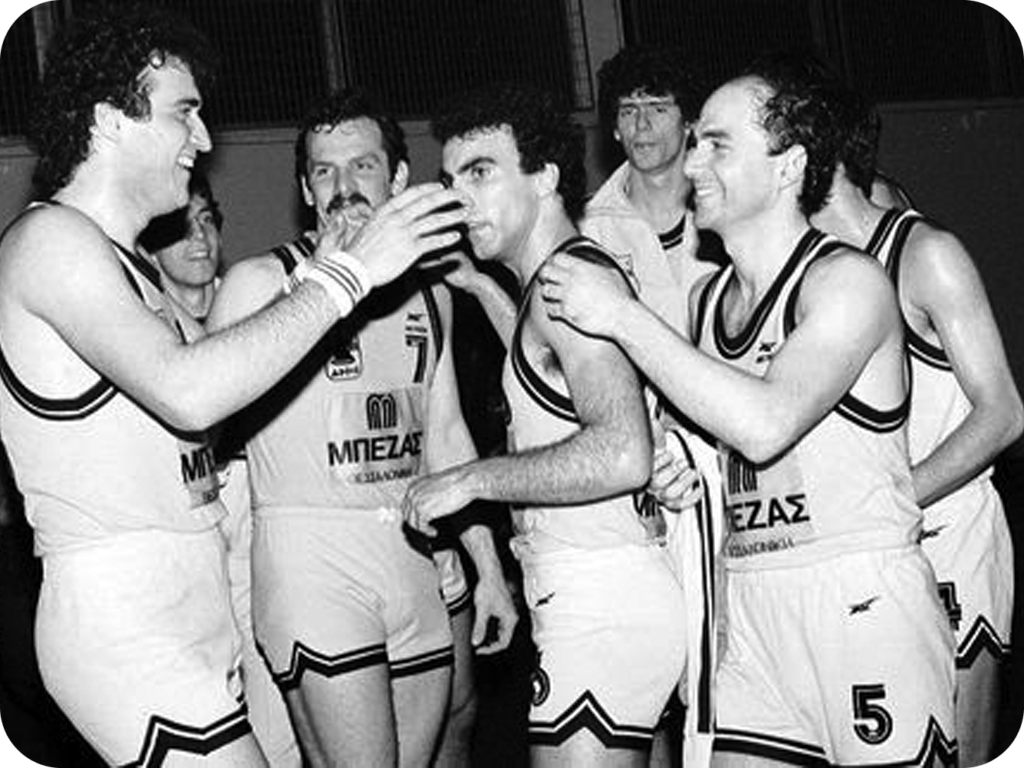
Forty-nine years after its first championship in 1930, ARIS returned to the top of Greek basketball in the 1978–1979 season, breaking the long-standing dominance of Athens-based clubs that had prevailed since the establishment of the First National Division in 1964. Under the leadership of Giannis Ioannidis, in his debut season on the bench, and driven by the scoring prowess of Harris Papageorgiou, the “Yellows” finished with an impressive 24–2 record, suffering defeats only to Panathinaikos B.C. and Sporting B.C. in Athens. ARIS secured crucial victories over major rivals, including Olympiacos B.C., AEK B.C., PAOK B.C., and Iraklis B.C., as well as a decisive home win against Panathinaikos, performances that ultimately defined the title race. The championship-winning roster featured Alexandris (captain), Papageorgiou — who led the league in scoring with an average of 38 points — Cholopoulos, Skondras, Paramanidis, Ananiadis, Vamvakoudis, Kalantidis, Spartalis, Nastos, Spiliotis, Voreadis, Stylianou, and Degermentzis, under the presidency of Apostolos Georgiadis. This triumph proved to be a turning point, laying the foundation for the “Empire” that would dominate Greek basketball throughout the 1980s. Shortly after, in late 1979, a 23-year-old Greek-American guard arrived in Thessaloniki — a rising NCAA scoring star named Nikos Galis. Despite strong interest from Athenian clubs, Galis chose ARIS, witnessing from the stands his new team’s dramatic 104–103 overtime victory against Maccabi Tel Aviv B.C. on October 31, 1979. He made his official debut on December 2, 1979, scoring 30 points in a narrow 79–78 win over Iraklis — the beginning of a historic era for both the player and the club.
1983
THE GOLDEN ERA BEGINS
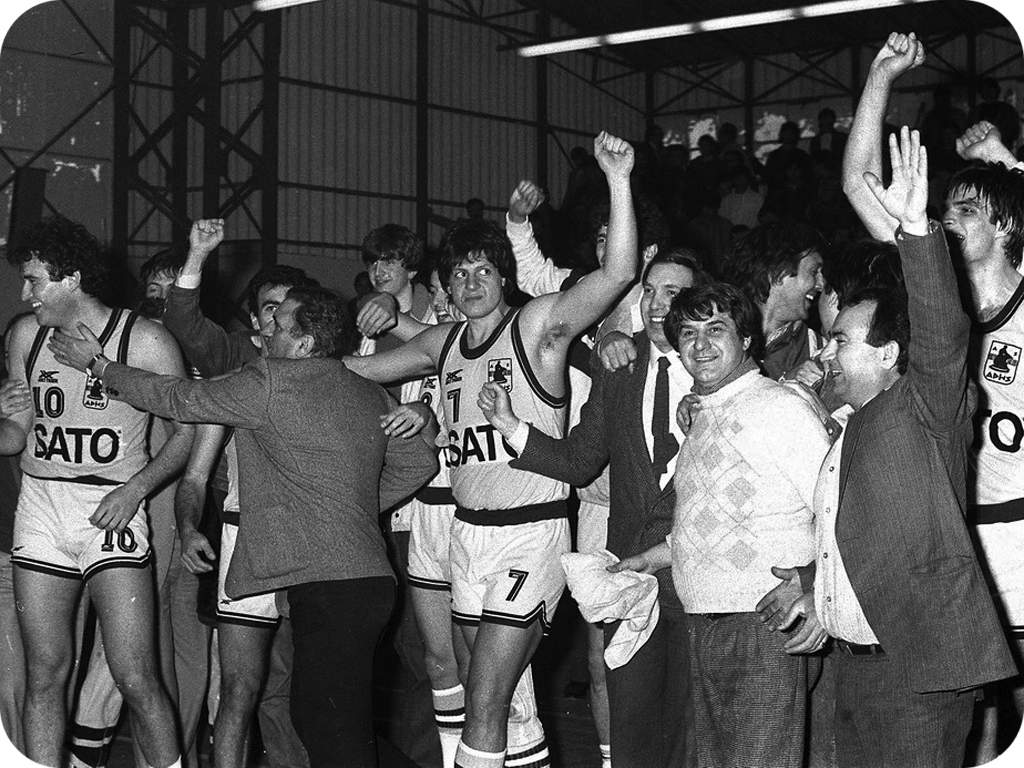
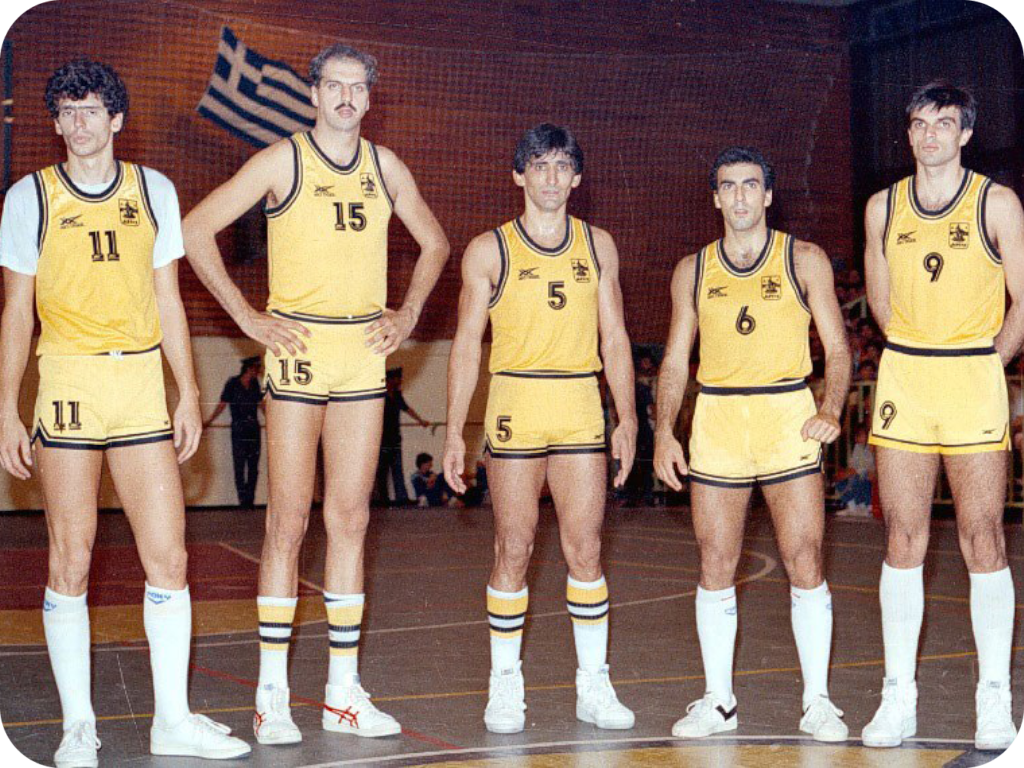
With Giannis Ioannidis returning to the bench and Nikos Galis firmly established as the league’s leading scorer, ARIS reclaimed the Greek Championship in the 1982–1983 season. The team remained unbeaten at the Alexandrio, recording significant victories over Olympiacos B.C. (109–88), AEK B.C. (91–73), Panathinaikos B.C. (72–70 in front of 7,000 fans in a decisive game), and PAOK B.C. (77–69 in Larissa due to a stadium ban). On April 23, 1983, ARIS officially returned to the top of Greek basketball. The roster featured Paramanidis (captain), Galis (league top scorer), Georgiadis, Doxakis, Karageorgis, Papageorgiou, Romanidis, Skondras, Stamatis, Stylianou, Toukmenidis, Tsachtanis, Tsitakis, Filipou, and Christofakis, under the presidency of Vangelis Melissaratos. The following season, ARIS remained highly competitive, finishing with a 24–2 record and tied for first place with Panathinaikos; however, it fell short in the decisive Corfu playoff (80–76) and was also defeated in the Greek Cup final by PAOK (74–70). Despite these setbacks, the team achieved a landmark international victory, defeating Maccabi Tel Aviv B.C. 76–75 at the Yad Eliyahu Arena — a result that reinforced ARIS’ growing presence on the European stage, even though the return game in Thessaloniki ended in a 68–62 loss.
1985
THE FIRST “DOUBLE”
In the summer of 1984, ARIS strengthened its roster by signing Panagiotis Giannakis from Ionikos Nikea, forming alongside Nikos Galis one of the most iconic backcourts in European basketball. That season, ARIS secured the first “double” in its history, dominating the Greek Championship with a 25–1 record, suffering its only defeat against Panionios B.C. after double overtime. The team was equally commanding in the Greek Cup, culminating on May 9, 1985, at the Peace and Friendship Stadium, where ARIS defeated Panathinaikos B.C. 86–70 to claim the trophy. Giannakis delivered an exceptional performance with 37 points, including 8 three-pointers, while Galis added 33, with the duo combining to match the entire scoring output of their opponents. This period also marked the beginning of ARIS’ consistent presence in European competitions, as the club eliminated established teams such as Zadar, Le Mans, and Livorno in the Korać Cup. However, on the eve of the semifinal against Varese, Galis suffered a broken hand and was sidelined for the first leg. Despite his absence, ARIS secured an 80–77 home victory in front of 6,500 fans, with a decisive last-second three-pointer by Giannakis, before being eliminated in the return leg following a 95–71 defeat.
1988
THE FIRST Final Four
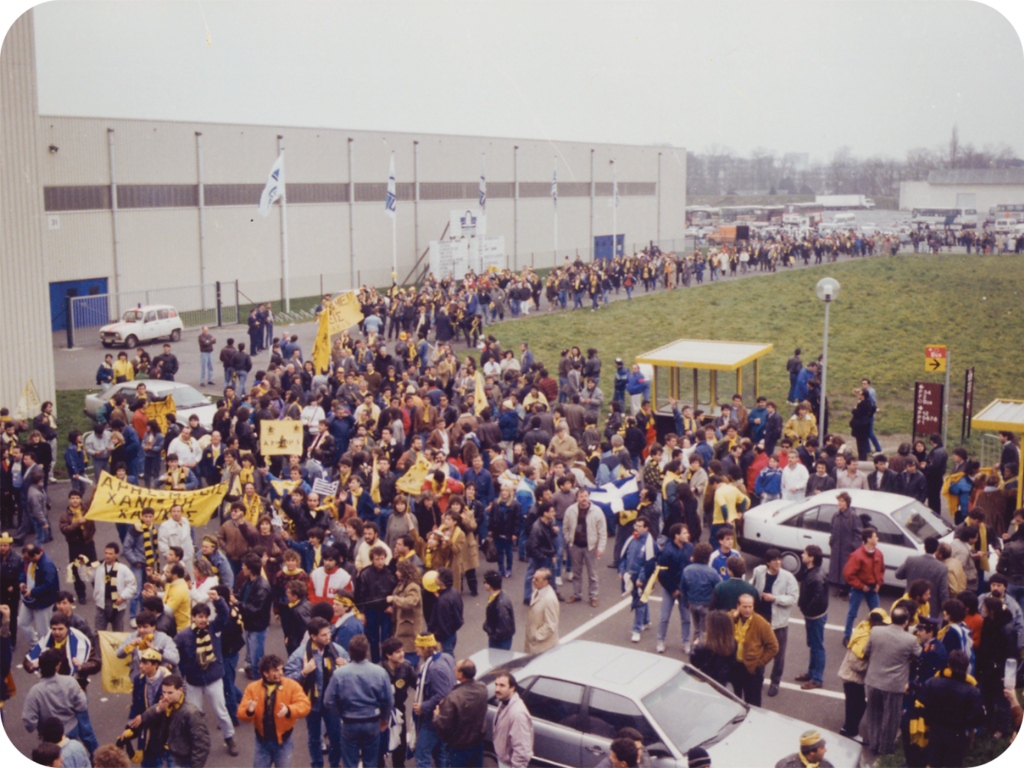
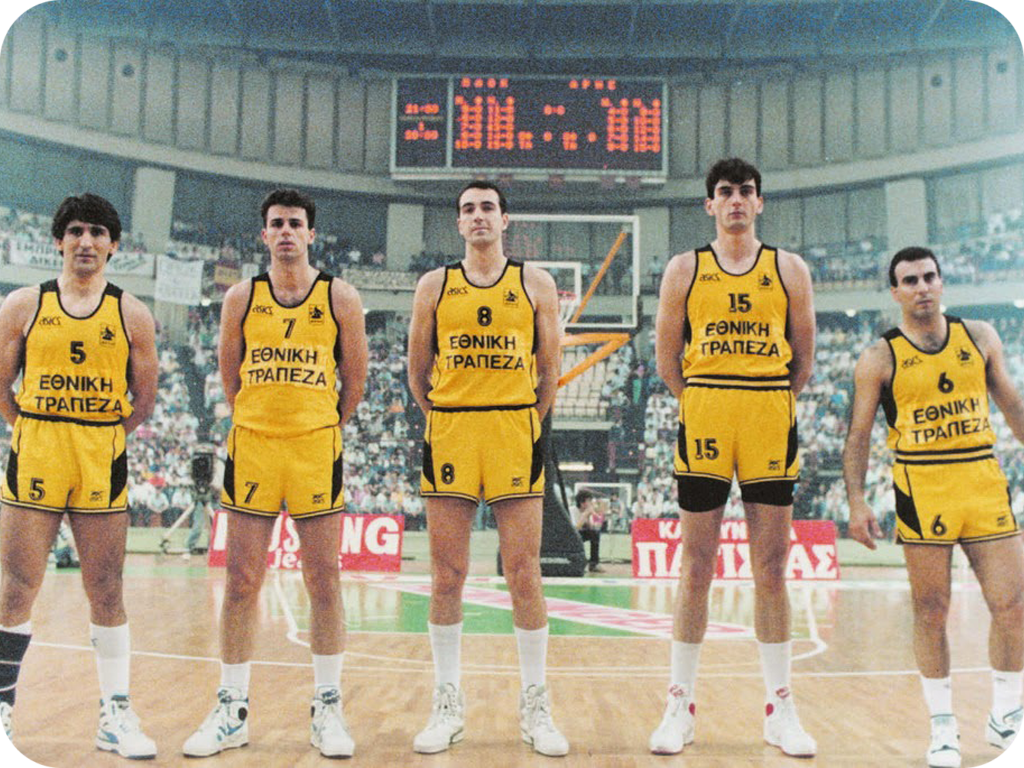
By the mid-1980s, ARIS had established itself as the undisputed powerhouse of Greek basketball, winning consecutive Championships and Cups while setting its sights firmly on European success. With the addition of Lefteris Subotic in the 1986–1987 season, the “Yellows” signaled their potential by handing Italian champions Tracer Milan a historic 98–67 defeat — the heaviest loss in the club’s history at the time — although the Italians overturned the deficit in the return leg (83–49) to advance. The following season (1987–1988), ARIS emerged as a serious contender for the European title. After overcoming Swiss side Pigi, the team advanced to the group stage of the Champions Cup, where it proved it could compete with Europe’s elite. A landmark 89–88 victory over Barcelona at the Palau Blaugrana, driven by Nikos Galis (45 points) and crucial late three-pointers from Panagiotis Giannakis and Subotic, set the tone. ARIS followed with a dominant 120–95 win over reigning champions Tracer Milan in Thessaloniki — with Galis scoring 50 points and Subotic adding 37 — as well as victories over Maccabi Tel Aviv (93–77) and Partizan Belgrade (96–85), securing qualification to the Final Four in Ghent. Backed by overwhelming support — with Alexandrio selling out hours before tip-off and nationwide attention focused on the team — ARIS traveled to Belgium with high expectations. However, in the semifinal at Flanders Expo, the team was narrowly defeated 87–82 by Tracer Milan in a highly competitive contest, and two days later lost the third-place game to Partizan (105–93). Despite the outcome, the team’s impact was undeniable, with the passion of ARIS supporters drawing international attention and even earning the admiration of NBA Commissioner David Stern.
1989
THE SECOND Final Four – MUNICH
As reigning champions of Greece and driven by a growing desire for European recognition following the Ghent Final Four, ARIS entered the following season as one of the main contenders for a place in the Final Four in Munich. The team delivered a strong campaign in the Champions Cup group stage, suffering only one home defeat to Maccabi Tel Aviv B.C., while securing key victories over CSKA Moscow and Den Helder, and ultimately confirming qualification with a decisive 96–85 win against Jugoplastika Split. In the semifinal in Munich, backed by more than 6,000 traveling supporters, the team led by Giannis Ioannidis delivered a strong performance against Maccabi Tel Aviv, controlling the game until the 28th minute with a 68–60 lead. However, a moment of disruption shifted the momentum, allowing the Israeli side to recover and secure a 99–86 victory. In the third-place game, ARIS responded emphatically, defeating Barcelona 88–71 and reinforcing the sense that the team was capable of achieving even greater success on the European stage.
1990
THE THIRD Final Four – ZARAGOZA
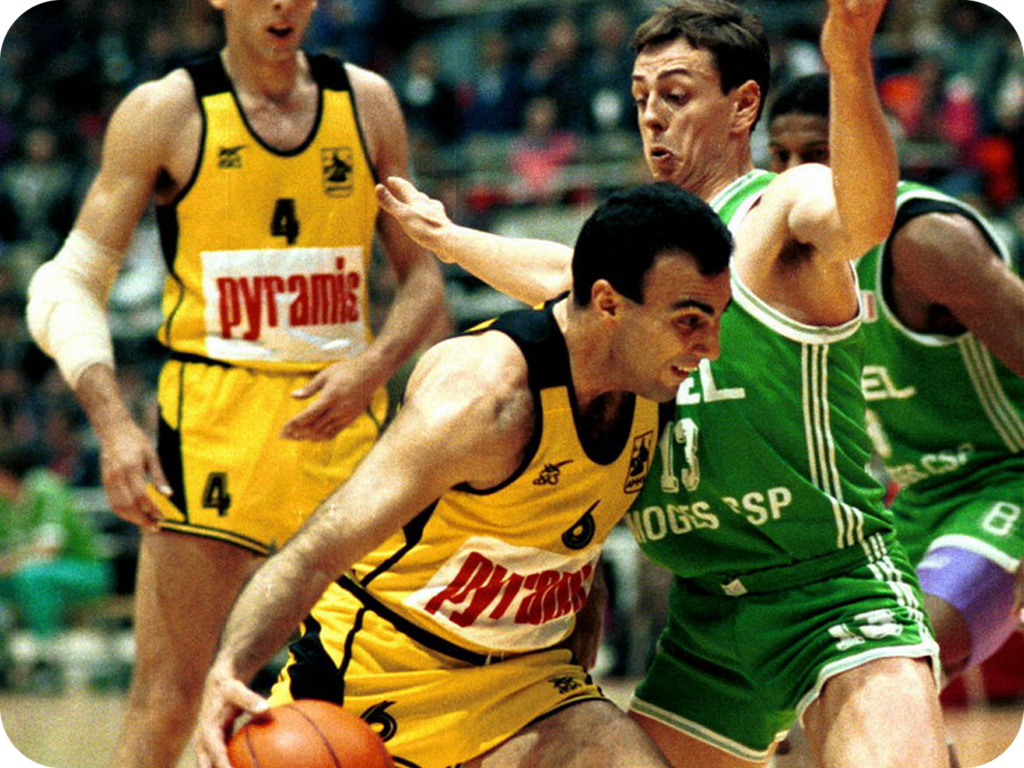
In the 1989–1990 season, ARIS continued its strong European presence, recording a standout performance in the Champions Cup group stage, highlighted by an impressive 89–85 away victory over reigning champions Jugoplastika Split. With this run, ARIS made history by becoming the first team to qualify for the Final Four for three consecutive seasons. A final group-stage defeat to Jugoplastika in Thessaloniki determined a challenging semifinal matchup against FC Barcelona Bàsquet, widely considered the favorite, especially as the Final Four was held in Zaragoza. Despite a promising start and the support of 2,500 traveling fans, ARIS was unable to match the Spanish side and was defeated 104–83. In the third-place game, the team faced Limoges CSP but suffered another loss (103–91), ultimately finishing fourth, yet further solidifying its consistent presence among Europe’s elite.
1993
AT THE TOP OF EUROPE
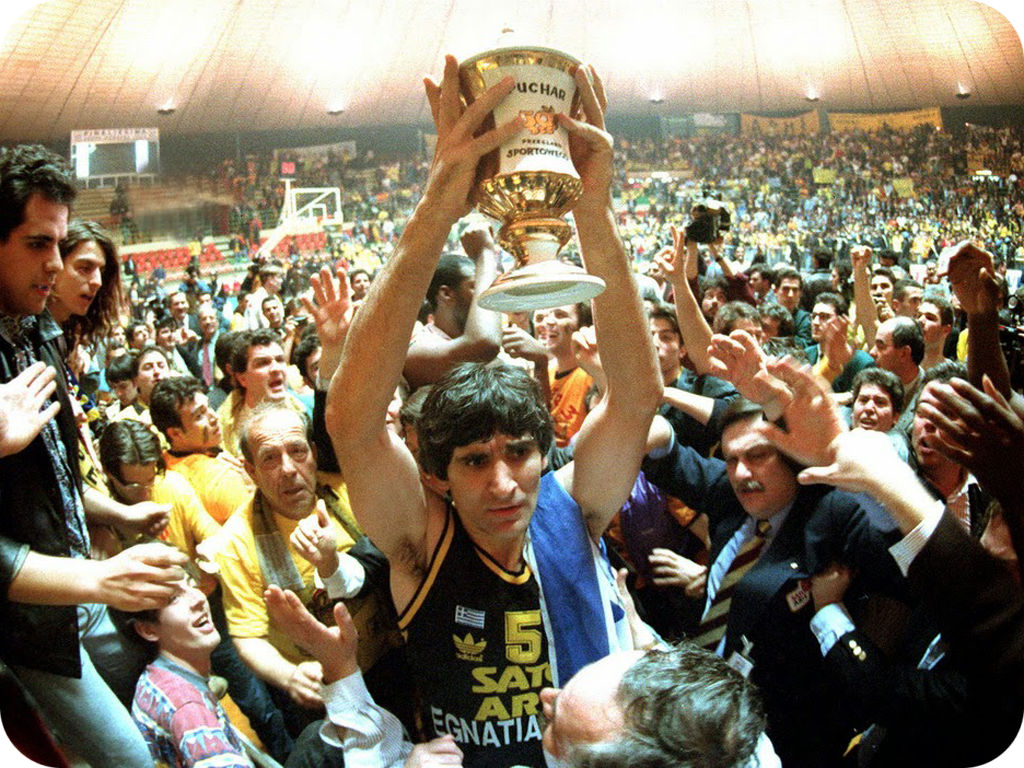
The early 1990s marked the gradual decline of ARIS’ “empire,” following an unprecedented period of dominance that included seven consecutive Greek Championships (1985–1991) and six Greek Cups (1985, 1987–1990, 1992). The 1991–1992 season proved particularly challenging, with significant administrative instability — including three different presidents — multiple coaching changes following the departure of Giannis Ioannidis, and ongoing financial difficulties that affected team cohesion. Despite these issues, ARIS managed to secure the Greek Cup, defeating AEK B.C. 74–62 in the final. That match, however, marked the end of an era, as it was the final appearance of Nikos Galis in the yellow jersey after 13 years of unparalleled contribution. Yet, in a remarkable turnaround, the first season without Galis led to one of the club’s greatest achievements. With Roy Tarpley emerging as a dominant presence, ARIS advanced to the FIBA Cup Winners’ Cup final with a 9–1 record, eliminating Zaragoza with two victories (86–84 in Spain and 82–66 in Thessaloniki). The final took place on March 16, 1993, in Turin against Efes Pilsen, where, backed by more than 5,000 supporters, ARIS prevailed in a tightly contested game (50–48) — the lowest-scoring final in the competition’s history. The trophy was lifted by Panagiotis Giannakis, alongside key contributors Tarpley, Anderson, Gasparis, Misounov, Ioannou, Angelidis, Vourtzoumis, Moraitis, and Paralikas, marking a historic European triumph for the club.
1997
THE GREAT STRUCTURE OF PROUSA
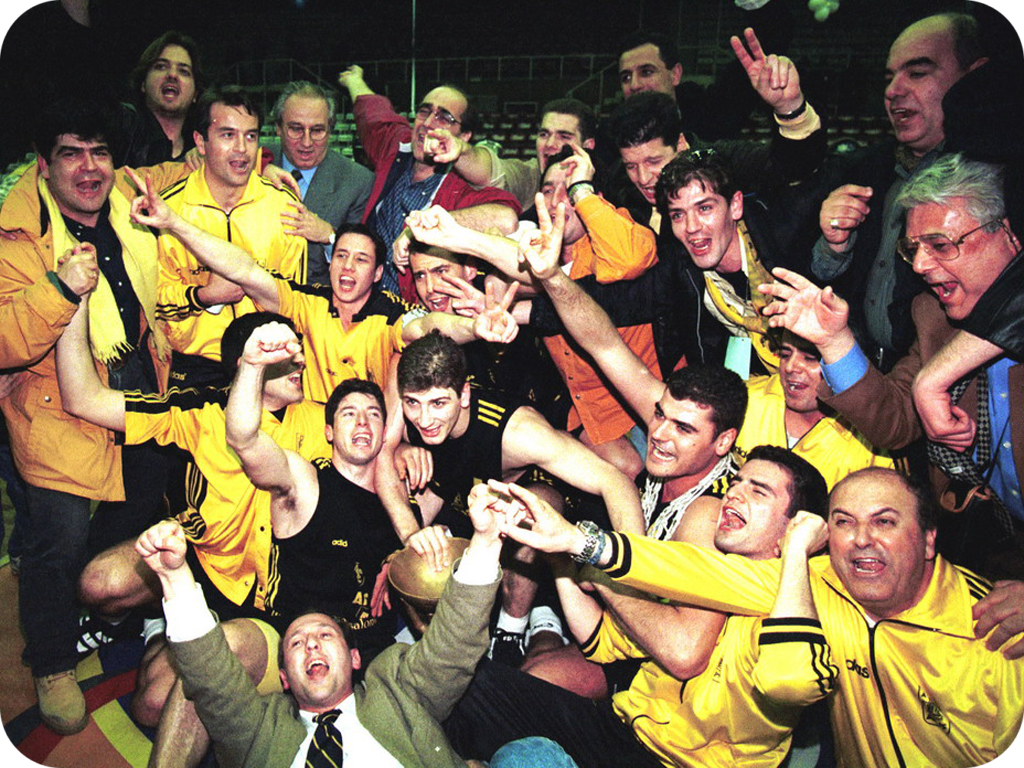
Four years later, ARIS returned to European glory by winning the FIBA Korać Cup. The arrival of key foreign players such as José Ortiz, Charles Shackleford, and Mario Boni, combined with the presence of Greek internationals including Liadelis, Angelidis, and Sioutis, significantly strengthened the team. ARIS showcased its quality throughout the competition, eliminating Beşiktaş, Beopetrol, and Peristeri to reach the semifinals, where it faced Benetton Treviso. After a narrow 77–73 win in Thessaloniki, ARIS secured qualification in a dramatic return leg, prevailing 87–86 in overtime, with Boni delivering the decisive moments. In the two-legged final against Tofaş Bursa, ARIS suffered a setback in the first game at home (66–77), but produced a remarkable response in Turkey. With a dominant second-half performance, the team overturned the deficit and secured an emphatic 88–70 victory, claiming the trophy in hostile conditions. Players Angelidis, Liadelis, Sioutis, Boni, Ortiz, Shackleford, Stavrakopoulos, Nachar, Floros, and Cholopoulos, under the guidance of coach Lefteris Subotic, etched their names into the club’s history by delivering another major European triumph.
2003
TURNING THE PAGE WITH “GENESIS”
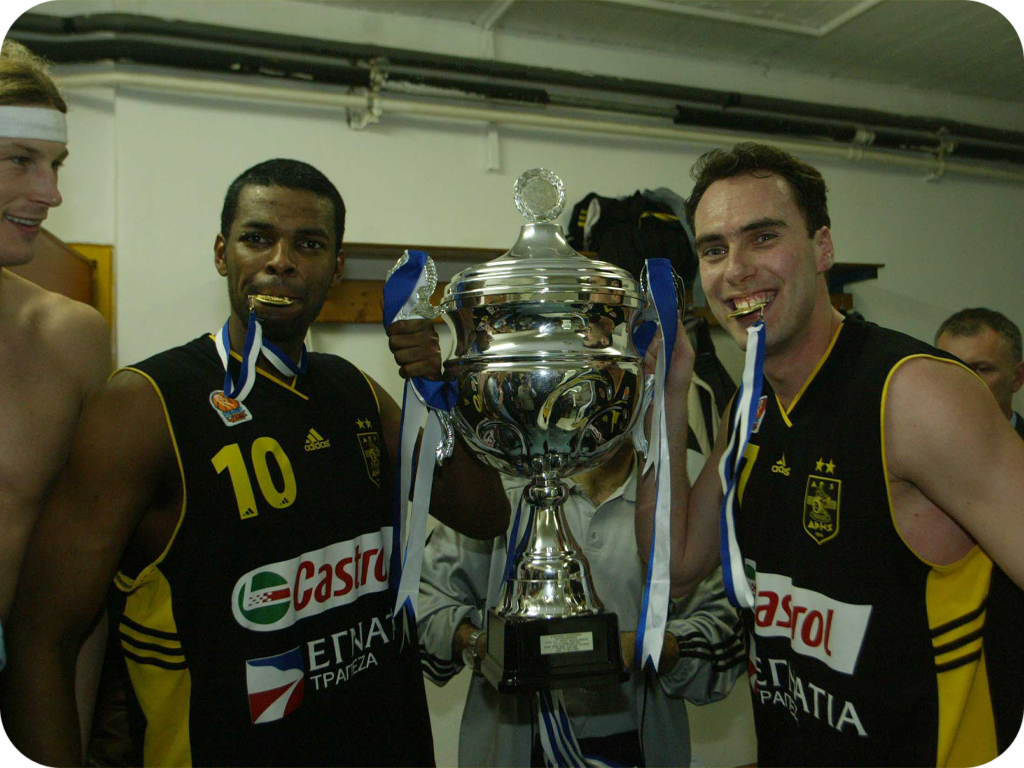
In 1998, ARIS claimed the Greek Cup with a 71–68 victory over AEK B.C., led by Giannis Ioannidis, in a final played in front of its home crowd. However, the turn of the millennium brought increasing financial and administrative challenges for the club. Signs of recovery began to emerge during the 2002–2003 season, when ARIS secured the 20th title in its history. After falling short in the Greek Cup final against Panathinaikos B.C., the team achieved success in the FIBA Champions Cup Final Four, hosted at the Alexandrio. In a dramatic final, ARIS defeated Prokom Trefl 84–83, with Miro Raičević scoring the decisive basket just four seconds before the end. Under coach Vangelis Alexandris, captain Giannis Lappas and key players including Willie Solomon, Stack, Gagaloudis, Nikolaidis, Grgat, Angelov, and Kakaroudis lifted the trophy, adding a second star to the club’s jersey. At the end of that season, ARIS entered a new phase with the creation of “GENESIS,” an initiative led by prominent supporters who assumed responsibility for the club’s future, aiming to restore stability and long-term growth. The following season (2003–2004), ARIS added its 21st trophy by winning the Greek Cup once again, defeating Olympiacos B.C. 73–70 in an eventful final held in Lamia, which was temporarily interrupted due to incidents before being completed behind closed doors.
2006
BACK TO EUROLEAGUE
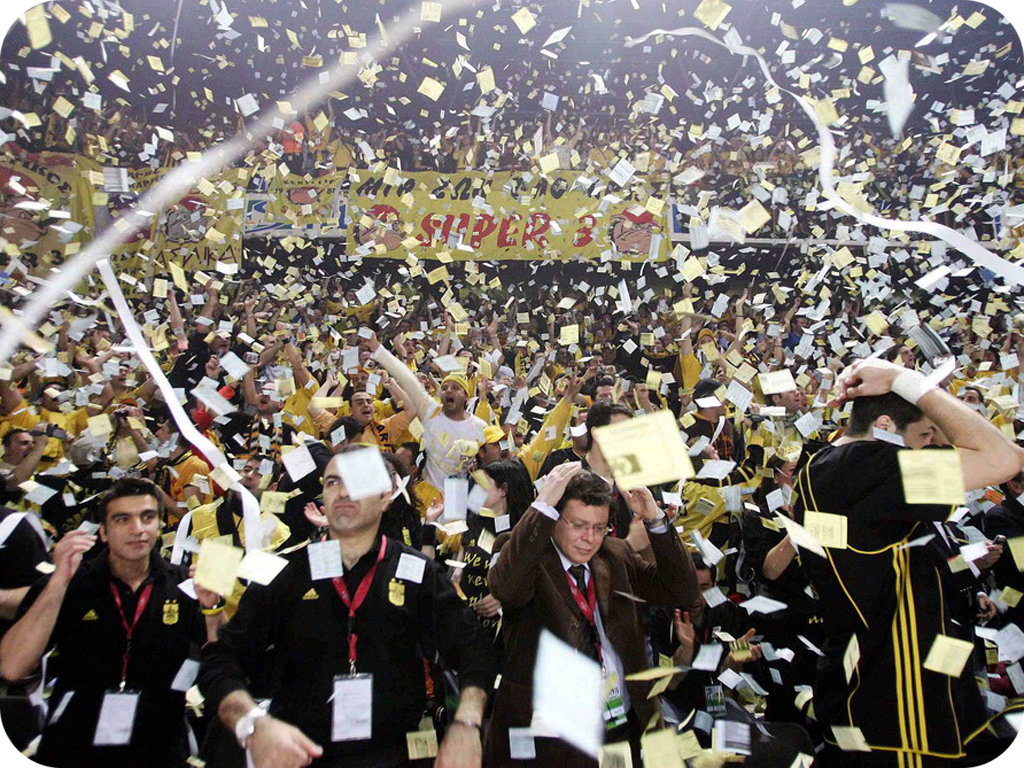
The next milestone for ARIS was its return to Europe’s top club competition, with qualification for the EuroLeague secured during the 2005–2006 season. Under the guidance of Andrea Mazzon, the “Yellows” initially pursued qualification through the ULEB Cup, reaching the final in Charleroi but falling short against Dynamo Moscow (73–60). Ultimately, the objective was achieved through the Greek Championship, as ARIS prevailed 3–2 in the third-place series against Maroussi, clinching the decisive game 63–59 on the road. The club’s return to the EuroLeague in the 2006–2007 season, after a 14-year absence, was marked by a strong campaign that reached the Top 16 stage. Domestically, ARIS recorded its best performance since 1991, finishing second in the regular season with a 21–5 record. However, the team was eliminated by Olympiacos B.C. in a five-game semifinal series, before securing third place against Panionios B.C. to ensure continued EuroLeague participation. In the 2007–2008 season, under coach Gordon Herbert, ARIS once again reached the Top 16, although its domestic campaign ended prematurely with a first-round playoff elimination by Maroussi.
2009
THE OBJECTIVES OF TODAY, THE DREAMS OF TOMORROW
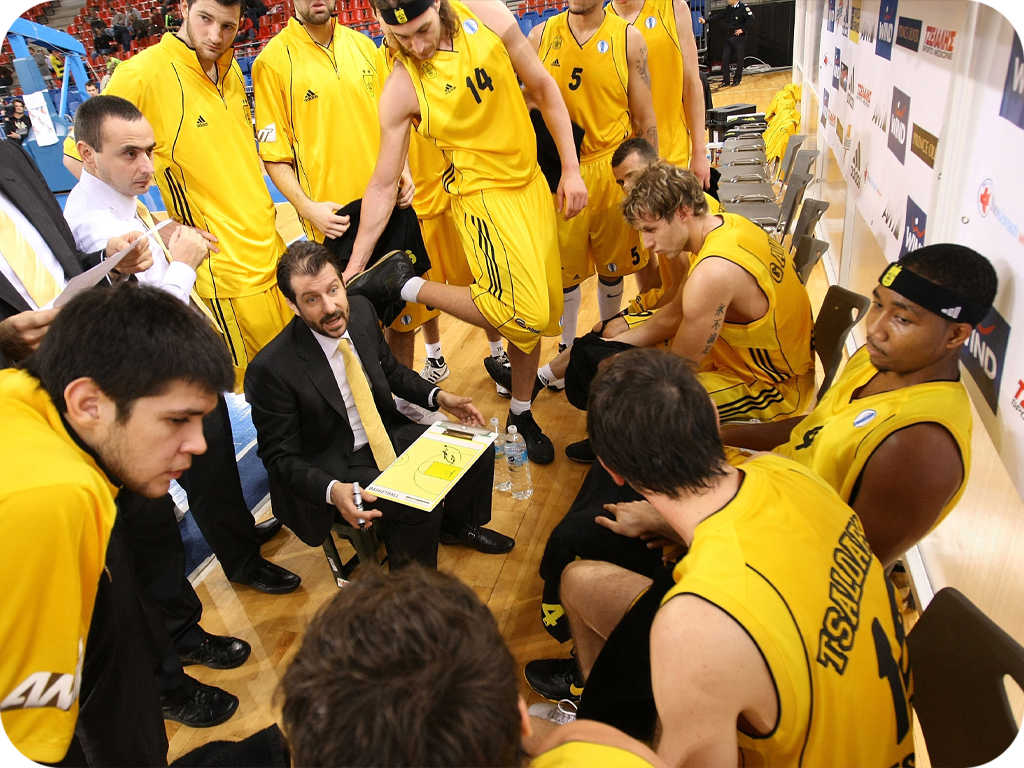
In the 2008–2009 season, ARIS finished third in the regular season of the Greek Championship but lost the decisive third-place playoff series to Maroussi, falling 76–72 in the fifth game at the Alexandrio. Despite this setback, the club received a EuroLeague Wild Card invitation, reflecting both its strong reputation and the consistent support of its fan base. Strengthened by experienced players such as Nikos Hatzivrettas, Dimos Dikoudis, and Michalis Kakiouzis, ARIS aimed to secure a place in the group stage but was eliminated by Maroussi in the preliminary round. In the following years, the team underwent frequent coaching changes, with figures such as Fotis Katsikaris, David Blatt, Sharon Drucker, Lefteris Subotic, and Vangelis Alexandris taking charge. During the 2009–2010 season, under the leadership of David Blatt, ARIS once again fell short of EuroLeague qualification but made a strong run in the EuroCup, reaching the Top 8 before being eliminated by Valencia (64–71 in Thessaloniki on March 24, 2010). In the seasons that followed (2010–2012), ARIS remained competitive in the EuroCup, consistently reaching the Top 16 stage of the competition.
2012
GETTING BACK ON HIS FEET
In the years that followed, ARIS faced significant financial challenges stemming from accumulated debts under previous management. In order to ensure its survival, the club entered the provisions of “Article 99,” enabling the restructuring and regulation of its obligations to the state and private creditors. This process led to a change in ownership in 2015, although the new structure remained in place for only a limited period. Despite these difficulties, ARIS reached the Greek Cup final in 2014, losing to Panathinaikos B.C. in Crete, and returned to the final again in 2017, where it was once more defeated by the same opponent at the Nick Galis Hall. These appearances marked the club’s most recent presence in a major final, as the years that followed were particularly challenging, shaped by ongoing financial constraints and the broader impact of the COVID-19 pandemic, which further affected the club’s stability and operations.
2023
BACK TO EUROPEAN COMPETITIONS
After several years away from European competitions, ARIS returned to the continental stage in the 2023–2024 BKT EuroCup. Despite operating with one of the lowest budgets in the competition, the team delivered a competitive campaign, recording 9 wins in 18 games and advancing to the knockout phase, where it was eliminated by BC Prometey. The performance marked a clear statement of the club’s resurgence and re-established ARIS’ presence at a high European level. Since then, ARIS has maintained consistent participation in the BKT EuroCup, reinforcing its return to international competition. In the 2025–2026 season, ARIS Betsson remained in contention for qualification to the next round until the final stages of the regular season, finishing with 8 wins in 18 games.
2025
A NEW ERA HAS BEGUN
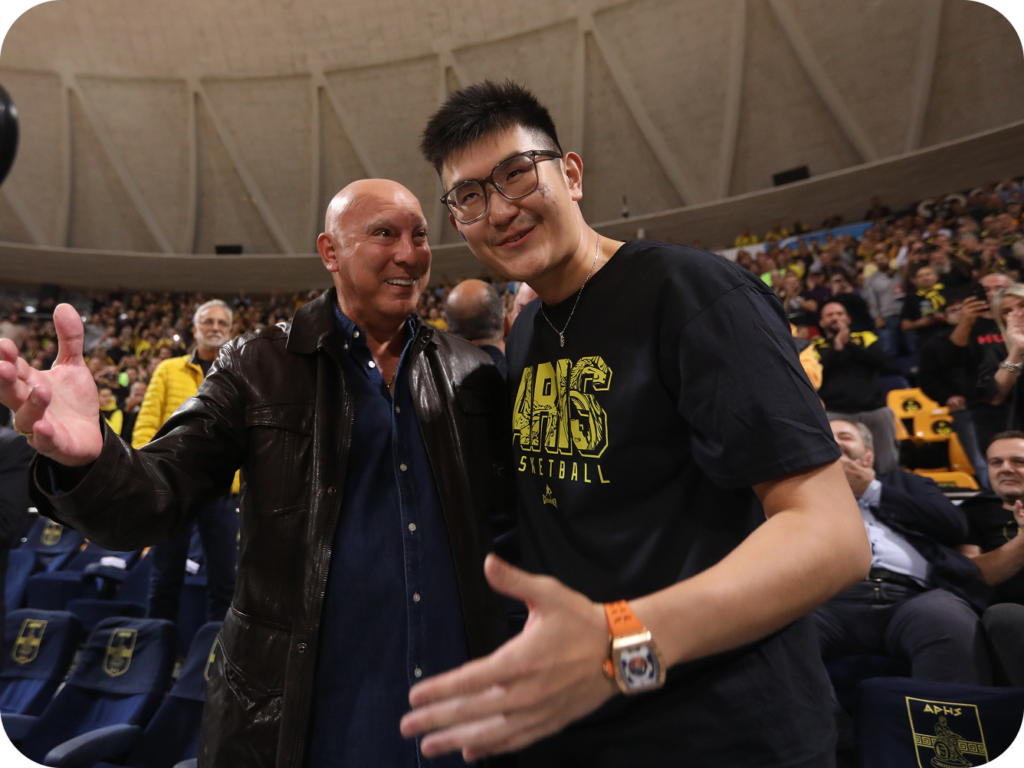
Following a prolonged search for a strategic investor capable of restoring the club to the highest level, a new era began on July 21, 2025, when Richard Hsiao’s fund assumed ownership of ARIS B.C. The announcement generated strong momentum among the club’s supporters, signaling renewed optimism for the future. Within the first months of the new ownership, the club addressed its outstanding financial obligations, marking a significant step toward long-term stability. This renewed confidence was reflected in record-breaking season ticket sales, with more than 3,000 sold in a 5,184-capacity arena. At the same time, the new ownership and management introduced a structured five-year plan focused on sustainable growth and competitive return. Parallel strategic initiatives — including developments related to the Nick Galis Hall and the integration of the ARIS Basketball Academy — further underline the club’s long-term vision. ARIS now enters a new chapter, built on stability, ambition, and the objective of returning to the top.
Supported by





STAY CLOSE TO THE FLAME
By subscribing to our newsletter you agree to our privacy policy